
Installation of New Bishop of Killala
"I came that you may have life" (Jn. 10:10)
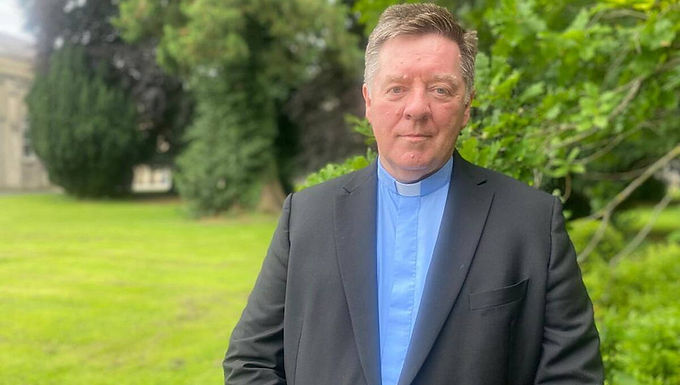
Archbishop Francis Duffy, Archbishop of Tuam was installed as Bishop of Killala on Sunday 26th April 2026. Below is a copy of the homily of Archbishop Francis Duffy on the occasion of his Installation as Bishop of Killala
A long history
I remember visiting a parish, some years ago, where the parishioners proudly put on a display of all the women and men, natives of the parish, who were priests or religious. The display covered a large section of a wall. Photographs and short biographies were supplied by the families of those from the area who ministered at home or abroad. It was a very impressive visual, dating back over a century.
Of course, for centuries Irish men and women have gone overseas as missionaries carrying the Word of God with them to communities and individuals through their pastoral work, education, and healthcare, evangelising the people and bringing them hope.
A wounded past
However, not all was good or wholesome or right. Not everything was as it should have been.
Many young people suffered, and years later, continue to suffer the effects of abuse perpetrated by clergy. We are grateful for those who spoke out about their terrible experiences, for the service of the media, for those who help bring healing and peace, and all those who now make our parishes safer places.
Generously answered the call
As we look back, we are also grateful for many pioneers, people with great vision and enterprise and generosity – and there were many – among the women and men who heard the Lord’s voice, recognised His call (Jn. 10:3,5) and generously answered it, and all those in families and parishes who encouraged and supported them in doing so.
Real faith in a different context
Today, we have a different context. The practice of the faith in terms of weekly attendance at Mass has fallen considerably, the number of vocations has declined dramatically. Yet, faith in the risen Lord, the Good Shepherd, continues to be important for very many people. This faith appears to be more complex, connected in varying degrees, more questioning, more thoughtful and more personal.
A shared mission lived locally
When I came to this diocese two years ago as Apostolic Administrator, I found a diocese that is like most others, and in some respects, also different. That is not unusual. While each diocese has the same mission of preaching the Good News of Jesus Christ, each one does this in slightly different ways, often drawing from its own history, traditions and context. The titles of some histories of Killala caught my eye, ‘Turbulent Diocese’, ‘Trouble and Strife’, and then the appealing, and always relevant title, ‘Where Do We Go From Here?’
“I know my sheep and my own know me”
So, challenged by Jesus’ own shepherding style of leadership, where He calls each one by name and leads them (cf. Jn.10:3-4), I set about getting to know the Diocese of Killala. The first step was to visit and personally meet with each priest, both in ministry and retired. This brought me into contact with those who have devoted their lives to work in this diocese as ministers of Jesus, preachers of his Good News. These men, and there is a great variety of them, they are sitting here in front of you, each responded to a call to follow Jesus in a particular way as a disciple. This was a call to follow Jesus, the Good Shepherd (Jn.10:11), and to be, in turn, shepherds of His People.
I thank them for their dedicated, imaginative and generous service to the People of God in this local Church. I also thank the priests for their warm welcome to me. I am humbled that you have already done so generously what Pope Leo asked you to do in his Apostolic Letter read earlier. Thank you.
Synodal Conversations in the Spirit
The second step was, along with our Pastoral Resource Person, to have twenty meetings with parishioners, clergy, and religious up and down the length and breadth of the two dioceses: Tuam and Killala. These synodal meetings were fruitful in that they provided a wide overview of people’s experience, fears and hopes. This of course was following on from – and in a sense building on – the great listening process that has taken place in the Diocese of Killala. I found that people welcome the call to serve in various lay ministries and they wish to find out more about them. They also hope to have priests. For those in positions of pastoral leadership, this presents a challenge.
Archbishop Neary, my predecessor in Tuam, in his new book Challenge, Courage and Call: The Word of God and Priestly Ministry, notes that encouraging lay participation while fostering priestly vocations can seem like a tension but, in truth, these vocations depend on and support one another. (cf. page 36).
In visiting many places, I found genuine appreciation for the initiatives taken by Bishop John Fleming. I thank Bishop John for his wise and imaginative work in Killala.
An Evolving Ministry
One key initiaitve taken by this diocese is the training and commissioning of eighty lay leaders. This is an important initiative in this local Church, and it will be an essential component of parish life into the future. This initiative is a result of the course taken by the energetic and far-seeing organisers of the synodal pathway in Killala. It is a legacy from this present generation to those who follow.
Legacy – authentic followers, supportive structures
I think the word ‘legacy’ is important. At this moment in time, in the diocese of Killala, and in many other places, we are at a stage where we can shape and leave a very active and dynamic legacy. It is not a legacy written in stone, forever unchanging, but one that is organic, can change and adapt and grow. Being authentic followers of Jesus Christ, the Good Shepherd, is at the core of that legacy.
Another part of that legacy is to have structures in place that will serve the community of believers as we, walking together, endeavour to answer the call we have received from the Lord. Parish and area Pastoral Councils and Finance Committees, Youth Ministry, Liturgy and others, generate and support communion, participation and mission. These structures help us to draw from the Lord’s own legacy. Jesus identifies this legacy at the end of the Gospel today where he says, “I came that they may have life and have it more abundantly” (Jn.10:10).
The Lord still calls
So, what of vocation today and into the future? While every vocation – lay, religious, and ordained – is a gift from the Lord, the Church, on the Fourth Sunday of Easter, has traditionally focussed on praying for vocations to the Priesthood. The Lord continues to call young men to priesthood. The next generation of priests is already around us – your son, your grandson, your brother, your football teammate, your college classmate, your work colleague. Part of our legacy-building is to help those whom the Lord is calling to hear and respond to the Shepherd’s voice.
In his message for this Day of Prayer for Vocations, Pope Leo XIV invites “everyone … to commit themselves more fully to creating conditions that allow this gift [of vocation] to be embraced, nourished, protected and accompanied, so that it may bear abundant fruit”. On this special day in the life of the Church in Killala, let us commit ourselves to do just that.
Towards greater cooperation and union
Since April 2024, this Diocese of Killala and the Archdiocese of Tuam have been on a journey towards greater cooperation and towards union. We are living at a moment of opportunity. Structures and practices may change, but the mission remains constant: to proclaim the Good News of the risen Lord.
I say thank you to our priests, our diocesan and parish committees, our committed parishioners, our lay ministers, for the legacy you are actively shaping. It will continue because, together “we place our hope in faith,” (cf. Killala Synodal Pathway).
Today, as we take the next step on our synodal journey, the response to the psalm is a prayer we can make our own because, “The Lord is my shepherd, there is nothing I shall want” (Ps. 23:1).
